



Independent GC-MS emission testing

We tested the flavoured air.

We tested the air you draw through a Lio, analysed by an independent laboratory to confirm what is in your breath, and what is not.

What isn't in your breath Confirmed
0
NicotineNever has been. Not low, not trace. None.
0
TobaccoNo leaf, no derivative, no synthetic stand-in.
0
CombustionNothing burns, heats or aerosolises.
Independent GC-MS emission testing
Why this page exists

An ingredient list tells you what goes in. We wanted to know what comes out.

What actually reaches you when you breathe through a Lio? So we had the air itself analysed by an independent laboratory using GC-MS, the standard method for identifying what is in a sample. Here is the honest version, in plain language.

Independent lab, not our own
GC-MS: standard chemical analysis
The air you breathe, not the recipe
Said plainly, including the limits
01 / WHAT'S INSIDE

Just botanicals. Nothing you can't pronounce for a reason.

The compounds carried on your breath are natural aroma molecules, the same ones that give mint, eucalyptus and citrus plants their character. And the device itself is about as simple as a device gets.

The aroma molecules

Natural mint terpenes & aromatics

These are the plant-derived molecules behind the scent, from food-grade essential oils, carried on pure air drawn by your own breath.

MentholMint
MenthoneMint
LimoneneCitrus
EucalyptolEucalyptus
PinenePine

The natural aroma family behind a mint core. Nothing is burned, heated or vaporised. The scent simply lifts on the air you draw.

The whole device

Three natural things, and your own breath.

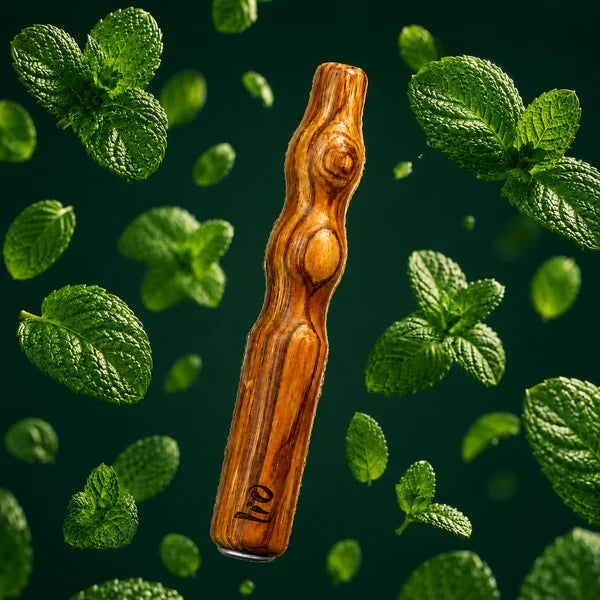
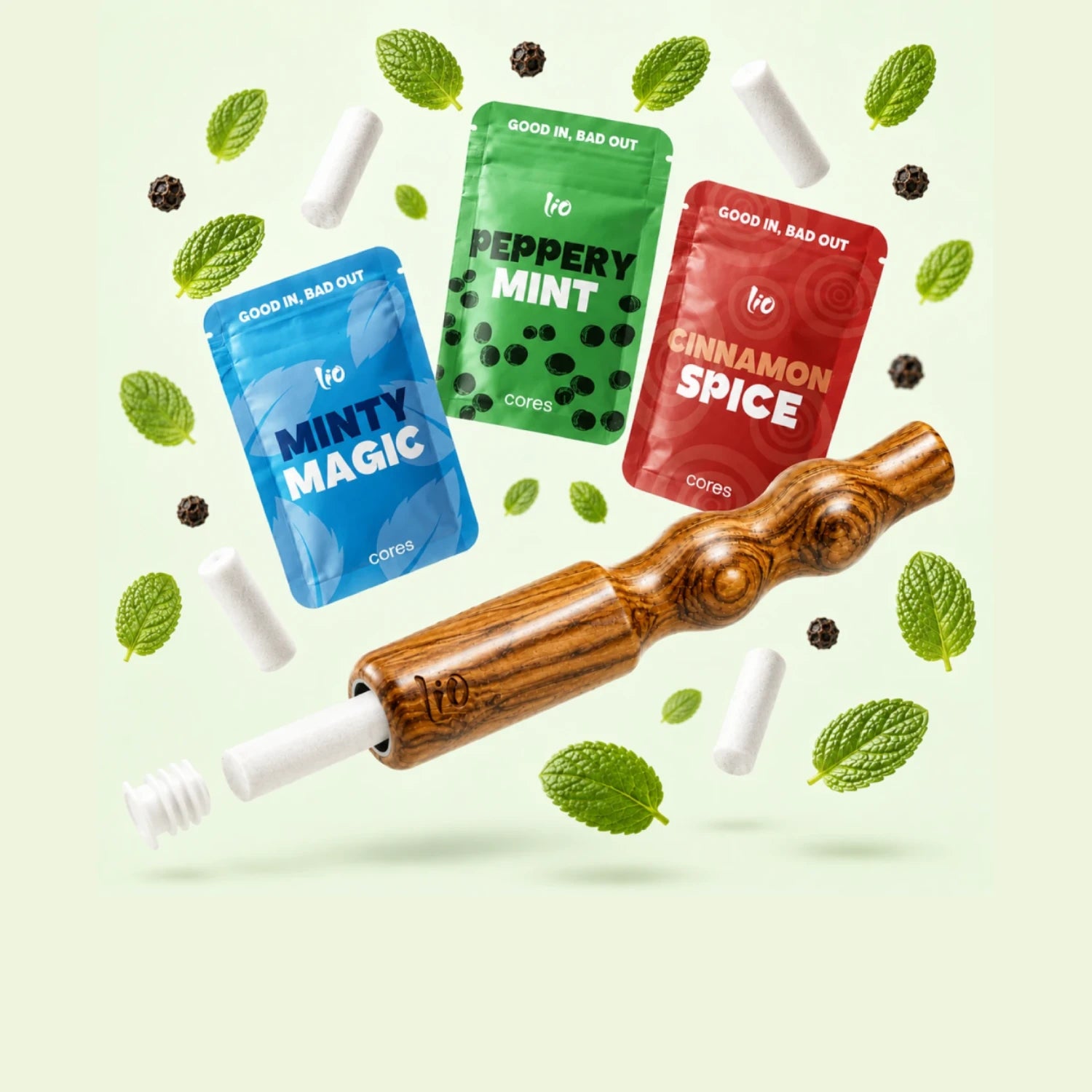
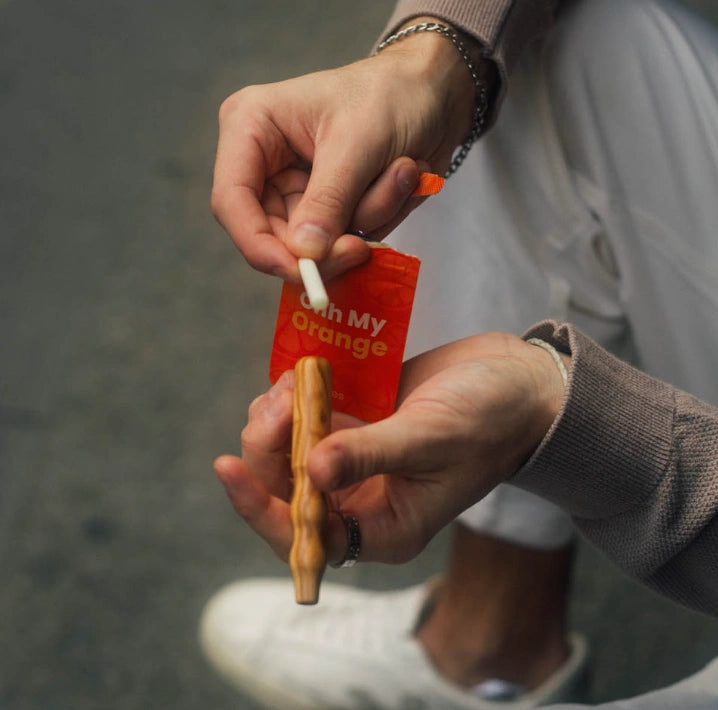
No cartridge to fill, no coil to burn, no battery to charge. Lio is a physical object made of natural materials. That is the whole story.

01
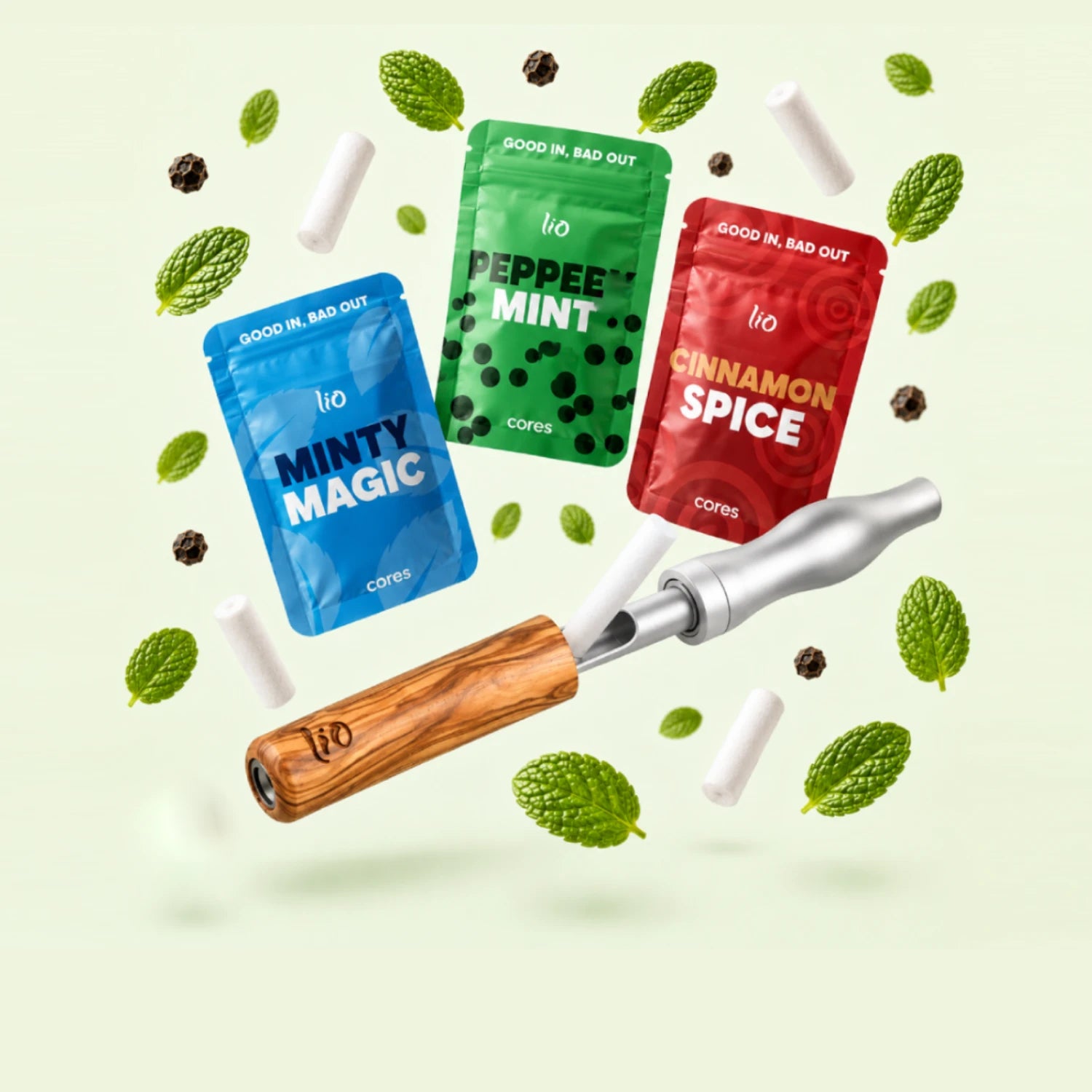
Olive or walnut woodHand-finished, solid. The body you hold.
02
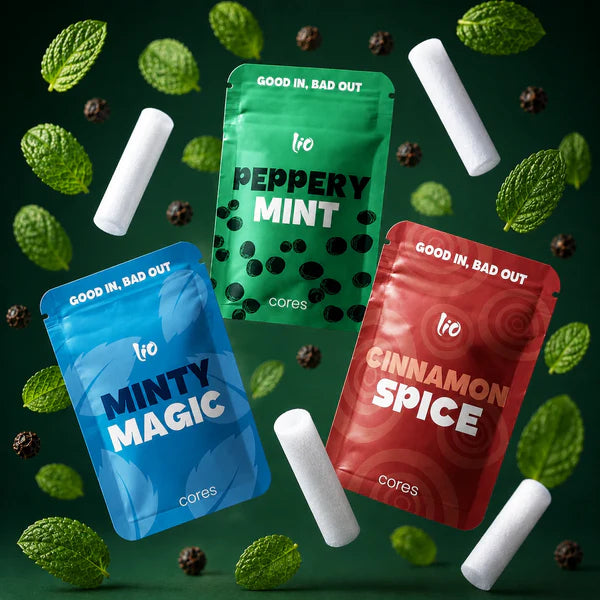
Plant-fibre coreHolds the botanical blend. No electronics inside.
03
Food-grade botanical oilsThe aroma, from real plants.
Your breathThe only thing that powers it.
02 / THE LEDGER

What's in it. What never will be.

One column is the natural aroma you draw in. The other is what simply isn't there, and never will be. No fine print between them.

In the air

Natural aroma
Mint terpenesMenthol, menthone: the character of mint itself
Citrus & pine notesLimonene, pinene, from the botanical blend
EucalyptolThe cooling note of eucalyptus
Pure airDrawn by your own breath. Nothing heated, nothing burned

Not in the air

None
NicotineNot low. Not trace. None.
TobaccoNo leaf, no derivative, no synthetic analogue
Combustion or vapourNothing burns, nothing heats, nothing aerosolises
Batteries or electronicsJust wood, fibre and plants, powered by your breath
Peer-reviewed · independently synthesized
03 / THE SCIENCE OF SCENT, BREATH & RITUAL

The evidence, read honestly.

Lio is built on four sensations people miss: a pleasant scent, the throat feel of a draw, a slow breath, and something to reach for. Researchers have studied each of these for decades. Here is what that work supports, and how far it goes.

0
smokers in the study where a pleasant scent eased acute craving in the moment
Sayette et al., 2019
0
patients across 76 studies; most reported lower anxiety with inhaled scent
Hedigan et al., 2023
0
participants in a habit-change analysis, where targeting cues and routines shifted outcomes
Black et al., 2020
0
minutes: short, active sessions worked better than longer ones
Guo et al., 2020

What the research supports.

Each finding below maps to one of the sensations Lio is built around. Tap to see the studies, and how strong the evidence really is.

Strong Moderate
Strong · multiple meta-analyses and large reviews

The best-replicated benefit of pleasant scent, and the one that matters most, since so much smoking and vaping is stress-driven. A meta-analysis of 32 randomized trials found meaningful drops in anxiety, and a review of 76 studies and 6,539 patients found most reported feeling calmer. Different settings, same direction.

Gong et al., 2020 · J. Affective Disorders
Meta-analysis of 32 RCTs: significant reduction in anxiety scores.
Hedigan et al., 2023 · Complementary Therapies
Review of 76 inhalation studies, 6,539 patients. Most reported reduced anxiety.
Liu et al., 2022 · General Hospital Psychiatry
Inhaled aromatherapy improved anxiety and mood across pooled trials.
Moderate · one solid, direct lab study

In a randomized study of 232 smokers, self-selected pleasant odours eased cue-triggered craving more than neutral or tobacco-related ones, and the relief held across a short window. About 90% said they could picture using a pleasant scent in real life. A real, direct signal, measured in minutes, not months.

Sayette et al., 2019 · J. Abnormal Psychology
232 smokers: self-selected pleasant odours eased cue-induced craving vs. controls.
Why moderate, not strong
Direct but narrow: anchored mainly by one well-run lab trial on short-term craving.
Moderate · consistent across older controlled trials

Part of what people miss is the feel of a draw in the throat and chest. In controlled trials, smokers who felt stronger airway sensations got more craving relief, and inhaling black-pepper vapour eased craving and calmed anxiety more than a scent-only or empty control, working partly through throat and chest feel, not smell alone. That sensory dimension is exactly what a deep draw through Lio delivers.

Westman et al., 1995 · Chest
Controlled inhaler trial: stronger airway sensation tracked with greater craving relief.
Rose et al., 1994 · Drug & Alcohol Dependence
Black-pepper vapour eased craving and anxiety via throat and chest sensation, beyond scent.
Moderate · large meta-regression and recent behavioural work

The gesture isn't just habit-noise. Across 43,992 participants, approaches that deliberately target cues and routines, giving the hand and mouth something else to do, shifted outcomes more than willpower alone. Newer work finds the pull of smoking gestures tracks with anxiety and self-soothing, not nicotine alone. A ritual you can keep is the thing Lio is designed to be.

Black et al., 2020 · Addiction
Meta-regression, 43,992 participants: targeting cues and routines was associated with better outcomes.
Zamboni et al., 2025 · Frontiers in Public Health
Perceived importance of smoking gestures linked to anxiety. Hand-to-mouth as self-soothing.
Moderate · mechanistic and implementation evidence

How you use scent matters as much as which scent. Inhaled aromatics measurably move breathing rate and heart-rate variability toward a calmer state, and reviews find short, directed sniffing more effective than passively filling a room, with sessions of 20 minutes or less outperforming longer ones. A thing you pick up, breathe from, and put down. The exact shape of Lio.

Sattayakhom et al., 2023 · Molecules
Inhaled oils produced measurable shifts in breathing rate and heart-rate variability.
Guo et al., 2020 · Int. J. Nursing Studies
20 RCTs, 1,717 adults: short, active sessions (20 min or less) gave a stronger benefit than longer ones.
The honest part

None of these are studies of Lio itself. They study scent, breath and ritual in general, and we share them as the thinking behind how Lio is built. Lio is a nicotine-free botanical ritual, not a cessation treatment or medical device. Where the research is strong, we lean on it. Where it stops, so do we.

04 / GOOD TO KNOW

The honest fine print, in large print.

A botanical product made from natural plants, designed for low-exposure aroma delivery. A few plain-language notes.

01

Natural doesn't mean nothing

Essential-oil compounds are real plant chemistry, which is exactly why Lio is built for low-exposure aroma delivery: trace amounts of scent lifted on pure air, nothing burned or concentrated.

02

Sensitivities happen

Some people are sensitive to plant-derived aroma compounds. If you notice irritation, stop using and consult a professional.

03

Pregnant, lactating, or on medication

Speak with a physician before use.

04

Children & pets

Keep Lio and its cores stored out of reach. The cores are not for ingestion.

05 / QUESTIONS

Straight answers.

Does Lio contain nicotine? +

No. Zero. Independent GC-MS analysis of the inhaled air confirmed it: no nicotine, no tobacco, no synthetic analogues. Lio has never contained nicotine.

So what am I actually breathing? +

Pure air, drawn by your own breath through a botanical core, carrying trace natural aroma compounds from food-grade essential oils: mint terpenes and aromatics like menthol, menthone, limonene, eucalyptol and pinene. Nothing is burned, heated or vaporised.

What did the independent testing look at? +

An independent laboratory used GC-MS, a standard method for identifying what is in a sample, on the air you draw through a Lio during normal use, to confirm what is present and what is not. In plain terms: only natural plant-derived aroma compounds, and none of the things you would want to rule out.

What does the research actually show? +

The strongest, best-replicated finding is that inhaled scent is linked to lower anxiety and stress, across dozens of randomized trials and thousands of people. There is also direct evidence that a pleasant scent can ease an acute craving in the moment, that the throat and airway sensation of a draw carries real weight, and that the hand-to-mouth ritual itself matters. What the research does not establish is that any scented device helps people quit long-term, so we do not claim it.

Is Lio a quit-smoking product? +

No. Lio is a nicotine-free botanical ritual, a fresh thing to reach for. Independent research supports why scent, breath and ritual feel meaningful, but it does not establish long-term cessation effects, and we make no such claims.

LIO / SCIGC-MS TESTEDINDEPENDENT LAB0 NICOTINETransparency, for real

Independently tested. Plainly explained.

Everything here comes from independent GC-MS analysis of the air you breathe through a Lio, plus peer-reviewed research on scent, breath and ritual. If anything is unclear, ask us. We will answer directly.

Lio is a nicotine-free botanical product and is not a medical device. It is not intended to diagnose, treat, cure or prevent any disease, and makes no smoking-cessation claims. Research referenced on this page studied scent, breathing and ritual mechanisms in general and did not evaluate Lio. If you are pregnant, lactating, or taking medication, speak with a physician before use.